Angie Bunn has been asked more than once whether the ghosts came back when the volunteers started prying up water-damaged floorboards and repainting the porch rails. "If there is a ghost, it's a happy ghost," the homeowners association president told the Coastal Observer after an open house that preceded a vocal concert inside The Abbey. She was talking about the 1740 mansion at the center of Litchfield Plantation, the house that gave this Pawleys Island community its name and its Avenue of Live Oaks. What she was really describing was something rarer than a haunting: a group of homeowners who spent years in court to win back a building they already technically owned.
That is the part of this story that doesn't show up on a listing sheet or a community brochure. The plantation house didn't get restored because a developer decided it was time for an upgrade. It got restored because the people who live here took the keys away from the company that built the neighborhood.
Fifty Years of One Vote
Development at Litchfield Plantation started roughly half a century ago, and for most of that time the homeowners association board wasn't really the homeowners' board. Under the original governance structure, the Litchfield Plantation Company held what amounted to a majority of one in every board election, meaning the developer could outvote the residents who actually lived on the property whenever it mattered. That arrangement controlled the common assets that make this neighborhood what it is: the plantation house, the private beach house on Pawleys Island, the grounds along the Avenue of Live Oaks.
Homeowners challenged that structure in court, and eventually the association foreclosed on loans it had extended to the development company, loans that were partly secured by the plantation house itself. For the first time since the community's founding, the board and its assets answered to the people who pay the dues and walk the grounds, not to the company that platted the lots.
That governance shift happened quietly, the way most HOA business does. But it changed who gets to decide what happens to a 285-year-old house sitting on land the Tucker family once used to grow more than a million pounds of rice a year.
What Volunteers Actually Fixed
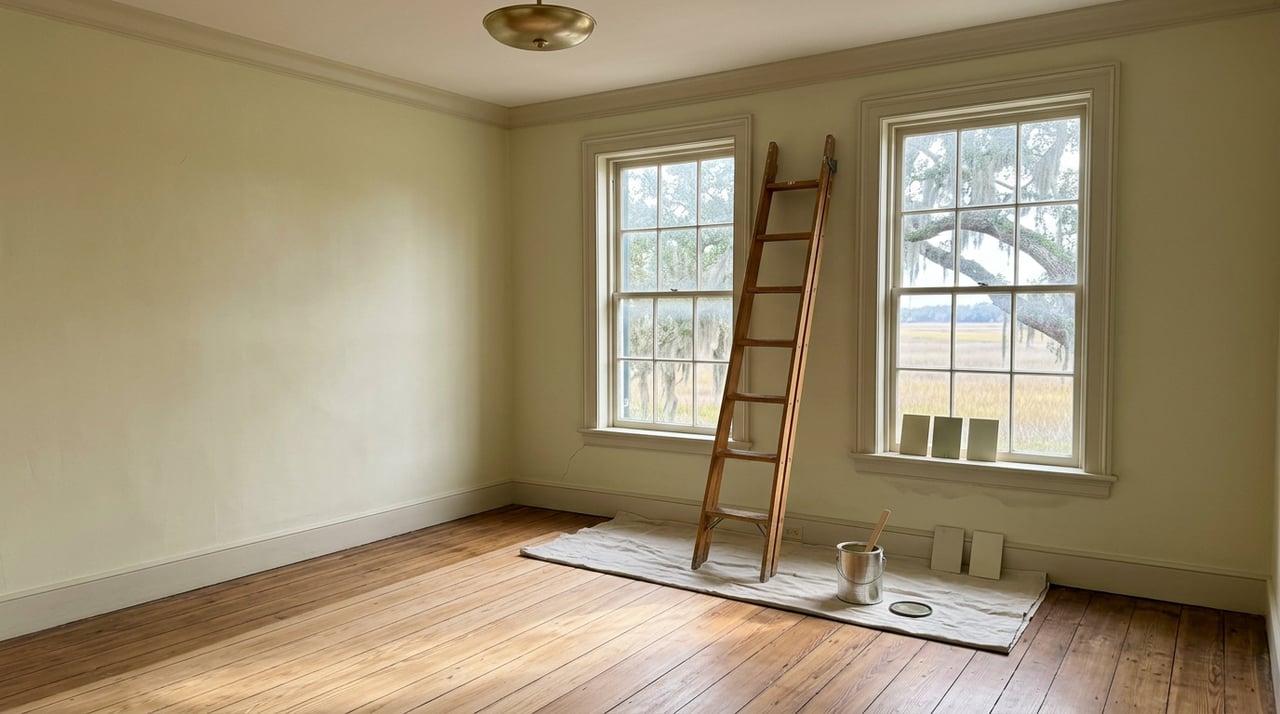
Once residents had control, the to-do list wasn't glamorous. The roof needed attention. Sections of the interior had water damage from years of deferred maintenance. The wooden floors still need refinishing. One former guest bedroom off the main room, its furniture worn out, is now being considered for a game room. There's a terrace off that main room that looks out over the old rice fields, and the association is weighing whether to cover it, though plenty of residents seem to prefer it open, since that's where people like to watch the sun go down.
Tom Eckard, who served as association president when the foreclosure sale went through, spent one recent open house directing visitors between the house and The Abbey next door. Some newer residents, he told the Coastal Observer, didn't even realize the plantation house was an amenity they were entitled to use. That's what years of a developer-controlled board and restricted access will do to institutional memory in a neighborhood.
"It gives you a sense of community," Eckard said of seeing the house full again.
Bunn put it plainly too: "We won't ever be able to make it exactly as it used to be, but we feel like we're doing a good job."
Same Bricks, Different Owners
Drive the Avenue of Live Oaks toward the water and the house sits at the end of it, the same spot it's occupied since a 1794 plat first recorded the mansion and the oak-lined lane together. The Tucker family ran the working plantation through most of the 1800s, and it's Dr. Henry Massingberd Tucker who supplies the community's ghost stories, the ones about a rider on horseback returning from a late house call and ringing the entrance bell to wake the stable hands. Nobody living here today has to take those stories seriously to enjoy repeating them.
Those old stables, meanwhile, aren't standing empty. The Abbey, an Anglican mission church, occupies that footprint now and holds a 10 a.m. Sunday service that draws from across the Waccamaw Neck, not just from inside the gates. It's an unusual pairing for a gated residential community, a working church built into the bones of a rice plantation's outbuildings, and it means the same grounds that host book clubs and holiday parties at the restored mansion also host a weekly congregation a short walk away.
The Working End of the Neighborhood
Not everything at Litchfield Plantation is about the house. The private marina sits between markers 77 and 78 on the Waccamaw River, a protected freshwater harbor with 68 slips, an on-site harbormaster, and room for boats up to 38 feet. It's built for exactly the kind of quiet, no-wake cruising the Waccamaw is known for, with direct access out to the Intracoastal Waterway for anyone headed toward Georgetown or Murrells Inlet.
August is a good month to be a boat owner here. Captains working the inlets around Pawleys Island have been chasing tarpon through the summer, and that run typically holds strong into September, which means dock conversation this time of year tends to run toward who hooked what off the Waccamaw entrance rather than the usual small talk. For residents who keep a boat in one of those 68 slips, that's not background noise. It's the reason to walk down to the marina on a Wednesday evening in the first place.
The Beach House Down the Road
The last piece of the puzzle sits a short drive away on Pawleys Island itself: a private oceanfront beach house with its own parking, reserved for property owners and their guests. It's a small detail compared to a restored 18th century mansion, but it's the same principle at work. An amenity that could have been sold off, leased out, or left to a developer's balance sheet instead stayed in the hands of the people who actually use it.
That's the thread running through all of this. A neighborhood built on a rice plantation could have ended up as a name on a gate and not much else, its history reduced to a marketing line about live oaks and moss. Instead, the people who live here spent years and real legal effort making sure the house at the end of the avenue, the dock on the river, and the beach house on the island stayed theirs to decide about. The floors still need refinishing. The terrace is still open to the sky. Those are homeowner problems now, not developer ones, and that difference is worth more than a fresh coat of paint.
If you're curious what else makes this stretch of the Waccamaw Neck worth a closer look, from the marina slips to the homes along the old rice fields, the Taylor Keenan Team knows this gate better than most. Start your Lowcountry search, or just ask a question about the neighborhood, and contact our team today.