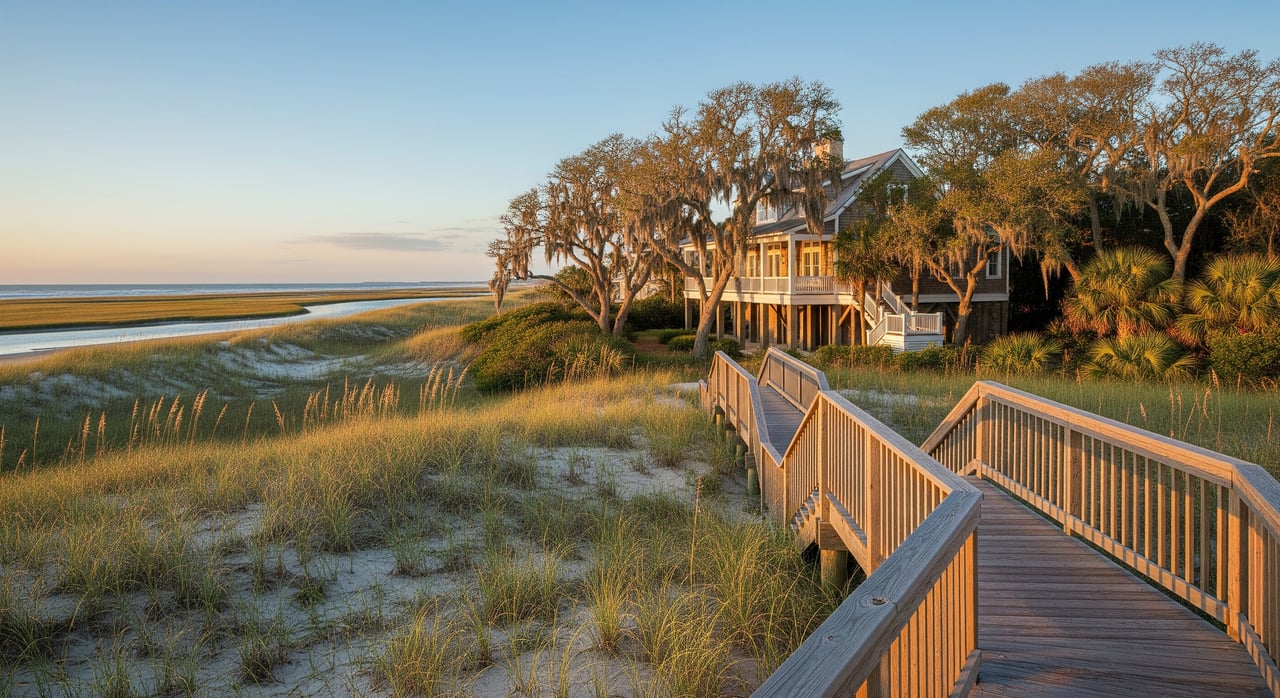
Wondering what people mean by a “raised beach” home on the Waccamaw Neck? If you are exploring DeBordieu Colony or nearby Pawleys Island and Litchfield, you will see this term often. It speaks to how coastal homes are designed to handle water, wind, and views right here on South Carolina’s Lowcountry coast. In this guide, you will learn what “raised beach” means locally, why it is used, the trade-offs, and what to check before you buy. Let’s dive in.
What “raised beach” means here
A raised beach home in this region is a coastal house with the main living areas elevated above natural ground or dune level. The goal is to keep the primary floors above flood and storm surge while opening up views and airflow underneath. This design is a common subtype of elevated, pile-supported homes seen along the South Carolina coast.
You get parking, storage, and utility space under the living level, along with large porches and windows oriented toward water. The design also helps preserve dune vegetation and the natural footprint when sited with care.
Core features of a raised beach home
- Pile foundations such as driven pilings or drilled piers supporting an elevated first living level.
- Open or semi-enclosed ground level, often with breakaway materials where required.
- Wide porches and decks facing the ocean, creek, or marsh.
- Exterior stairs and sometimes a residential elevator for access.
- Coastal-rated materials such as fiber-cement siding, metal roofing, and corrosion-resistant fasteners.
- Structural details that create a continuous load path and wind resistance, including hurricane ties and wind-rated windows and doors.
Why builders elevate on the coast
- Reduce the chance of interior flooding during storm surge and king tides.
- Allow waves and water to pass under the structure in mapped coastal high hazard areas.
- Promote airflow under the house to manage moisture and speed drying.
- Protect dune systems and vegetation while creating storage and parking underneath.
How it works on the Waccamaw Neck
The Waccamaw Neck is a narrow peninsula between the Atlantic Ocean and Winyah Bay. It includes barrier island dunes, tidal marshes, and low-lying areas with a high water table. These site conditions bring storm surge exposure, occasional wave action, and seasonal erosion and accretion.
Local elevation and setback rules are shaped by federal flood mapping, state beachfront regulations, and county ordinances. In practice, many homes are built or retrofitted to meet or exceed Base Flood Elevation and wind standards for this coast.
Flood and wave resilience
Elevating living spaces above the Base Flood Elevation reduces the likelihood of floodwater reaching interiors. In coastal high hazard zones, foundations are designed to handle wave forces, and ground-level enclosures are often made with breakaway components. These features work together to reduce water loads on the structure during storms.
Wind and moisture management
Raised beach homes use a continuous load path from roof to foundation to handle hurricane winds. Wind-rated doors and windows, roof attachment upgrades, and shutters are common. The open under-house area also helps with ventilation and moisture control, which supports durability in a salt-air environment.
Trade-offs to consider
Elevation reduces certain flood risks but does not eliminate wind, salt corrosion, or access challenges during severe weather. Stairs are part of daily life in many elevated homes and may be a consideration for mobility. Shoreline change can affect access and surroundings over time, and protective dune and vegetation management may be regulated.
DeBordieu Colony and nearby examples
DeBordieu Colony is a private, gated oceanfront community on the Waccamaw Neck. Oceanfront and dune-area homes commonly use elevated foundations to protect living spaces and respect the natural beach and dune setting. The community is guided by covenants and an Architectural Review Board that oversee siting, elevation, materials, dune preservation, and aesthetics.
Similar raised beach practices are seen across Pawleys Island, Litchfield, and Murrells Inlet. On barrier island lots and oceanfront streets, you will often find homes on pilings with generous raised porches and stair assemblies facing the water.
Community rules to review
- Architectural Review Board guidelines for elevation, height, and materials.
- Covenants that address dune preservation, vegetation, and exterior design.
- Any community projects related to beach nourishment, dune restoration, or coastal stabilization.
Maintenance and upkeep for raised beach homes
Coastal conditions ask more of a home, and a raised design adds elements that need routine care. Focus on the under-house space, fasteners and connectors, stairs and decks, and exterior finishes. Plan for more frequent inspections after major storms.
- Under-house space: keep clear for drainage and airflow, and check stored mechanicals and utility platforms.
- Materials: salt air accelerates corrosion, so plan regular painting, hardware replacement, and roof and siding checks.
- Stairs and decks: inspect treads, rails, and slip resistance, and budget for periodic replacement.
- Dunes and landscape: maintain approved vegetation and sand fencing where permitted, and follow community rules.
- Foundation checks: have pilings and connections inspected after significant storms to catch hidden issues early.
Insurance and cost factors to expect
Flood insurance is a major consideration for oceanfront and low-lying properties. Premiums often depend on an elevation certificate, the home’s height relative to Base Flood Elevation, and building features. Wind coverage is also a significant cost, and insurers often look for mitigation details such as updated roof coverings and wind-rated openings.
In gated communities like DeBordieu, HOA dues and assessments may support dune and beach projects or common area repairs. Elevated foundations and corrosion-resistant materials can add to initial build and long-term maintenance costs compared with inland homes.
Is a raised beach home right for a second home?
Raised beach homes suit second-home and vacation buyers who value coastal views and extra protection for living spaces. The storage and parking under the house make seasonal gear easier to manage, and it can be simpler to secure the property for the off-season. Just budget for stairs, coastal maintenance, and insurance, and plan for professional help during storm season.
If you will manage the home from afar, line up a property manager familiar with coastal properties, create a pre-storm and post-storm checklist, and build a trusted roster of local contractors.
Buyer action checklist for DeBordieu
- Request a current elevation certificate and confirm the lowest finished floor relative to Base Flood Elevation.
- Verify the FEMA flood zone for the lot and ask about any coastal high hazard designation.
- Review DeBordieu’s covenants and Architectural Review Board guidelines for elevation, materials, and style.
- Ask for recent structural and foundation inspections, including pilings and connectors.
- Obtain flood and wind insurance estimates and ask about available mitigation discounts.
- Confirm that HVAC units, electrical panels, and meters are elevated or protected.
- Check HOA budgets and any assessments tied to beach or dune projects.
- For second homes, discuss property management options and local vendor support.
Work with a local team you can trust
Choosing a raised beach home on the Waccamaw Neck is both a lifestyle move and a technical decision. You deserve a guide who knows the dunes, the flood maps, and the nuances of DeBordieu’s community rules. Our boutique team pairs hands-on service with the regional reach of The Litchfield Company and Christie’s International Real Estate, so you get practical guidance and polished results.
Ready to walk through raised beach options and get clear next steps for your search? Connect with the Taylor Keenan Team to start your Lowcountry journey.
FAQs
What is a “raised beach” home in DeBordieu?
- It is a coastal home with the main living floors elevated above natural ground or dune level to reduce flood risk, improve airflow, and maximize views.
How does elevation affect flood insurance costs?
- Insurance is often based on how the home’s lowest finished floor compares to the Base Flood Elevation, so greater elevation can influence premiums.
Are ground-level rooms in these homes for living space?
- In many coastal high hazard areas, ground-level enclosures are for parking, storage, and mechanicals, and may use breakaway construction rather than living space.
Do raised beach homes handle hurricane winds better?
- They commonly use continuous load paths, wind-rated windows and doors, and roof tie-downs that help resist high winds.
What maintenance is unique to raised beach homes on the Waccamaw Neck?
- Expect regular checks for corrosion, stair and deck wear, under-house drainage and ventilation, and post-storm inspections of pilings and connectors.
Can I add an elevator to a raised beach home in DeBordieu?
- Many owners install residential elevators for accessibility, subject to building codes and the community’s Architectural Review Board guidelines.